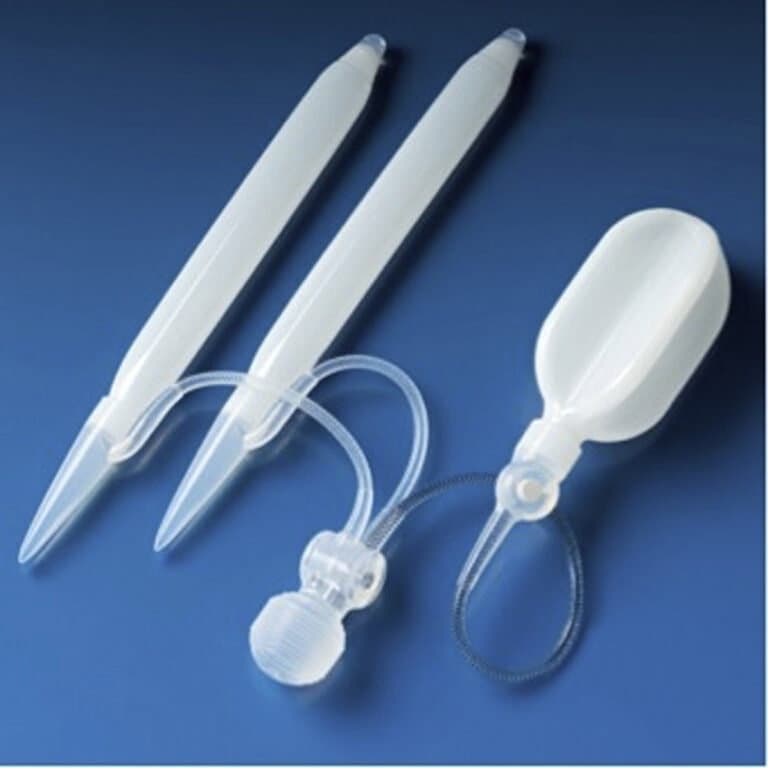
Infrapubic penile prosthesis: understanding a follow-up study
Interpret the results of a clinical trial, taking into account follow-up, complications and the limitations on their interpretation.
Author : Tarik EL RHAZAL
Published :
Updated :
Medical review pending
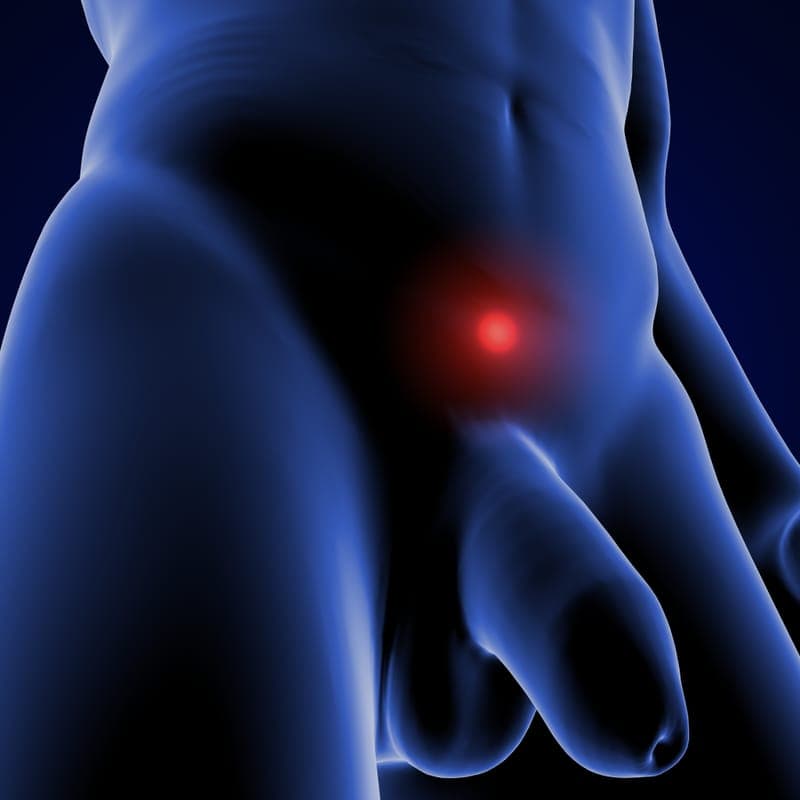
Severe sexual impotence or erectile dysfunction that is resistant to medical treatment often leads to consideration of surgery. The inflatable penile prosthesis (IPP) remains the surgical option of choice for many men.
Among the various implantation techniques, the minimally invasive infrapubic approach (MIIA) is attracting attention for its potential advantages: reduced operating time, faster recovery and greater overall satisfaction. This article presents the results of a follow-up study lasting at least five years in patients who underwent surgery via the MIIA approach.
Study methods
- Study population: 67 patients who underwent surgery via the minimally invasive infrapubic approach. - Follow-up duration: median of 71 months (ranging from 63 to 80 months). - Outcomes: - Complication rates (minor and major) - Implant survival (Kaplan-Meier analysis) - Sexual function and satisfaction assessed using the QoLSPP (Quality of Life and Sexuality with Penile Prosthesis) questionnaire.
Results
Complications
- 15 out of 67 patients (22 per cent) experienced a complication. - Minor complications (Clavien ≤ 2): - Change in sensation: 1 (1.5 per cent) - Orgasmic dysfunction: 1 (1.5 per cent) - Pain: 5 (7 per cent) - Urinary tract infection: 2 (3 per cent) - Chronic discomfort: 1 (1.5 per cent)
- Major complications (Clavien ≥ 3): - Mechanical failure: 3 (4.5 per cent) - Implant infection: 1 (1.5 per cent) - Cylinder protrusion: 1 (1.5 per cent)
Prosthesis survival
- 3 years: ~94 per cent (95 per cent CI: 91.4–96.6) - 5 years: ~92.5 per cent (95 per cent CI: 89.7–95.3) - 7 years: ~92.5 per cent
Satisfaction and functional outcomes
- 61 out of 67 patients (91 per cent) were still using their prosthesis at follow-up. - The QoLSPP questionnaire indicated high levels of satisfaction in the functional, personal, relational and social domains.
Discussion
- The results of this series are not sufficient to guarantee safety for every patient. - The durability of the implants is excellent (over 90 per cent after 5 years). - Patient and partner satisfaction remains high over time. - Compared with the penoscrotal approach, it appears to allow for a faster recovery and a shorter operative time, with comparable results in terms of safety and efficacy.
Conclusion
The minimally invasive infrapubic approach for the insertion of inflatable penile prostheses appears to be a safe, durable technique associated with high patient satisfaction in the medium term. It represents an attractive alternative for centres specialising in prosthetic urological surgery.
FAQ – Penile prostheses and the infrapubic approach
1. What is the minimally invasive infrapubic approach (MIIA)?
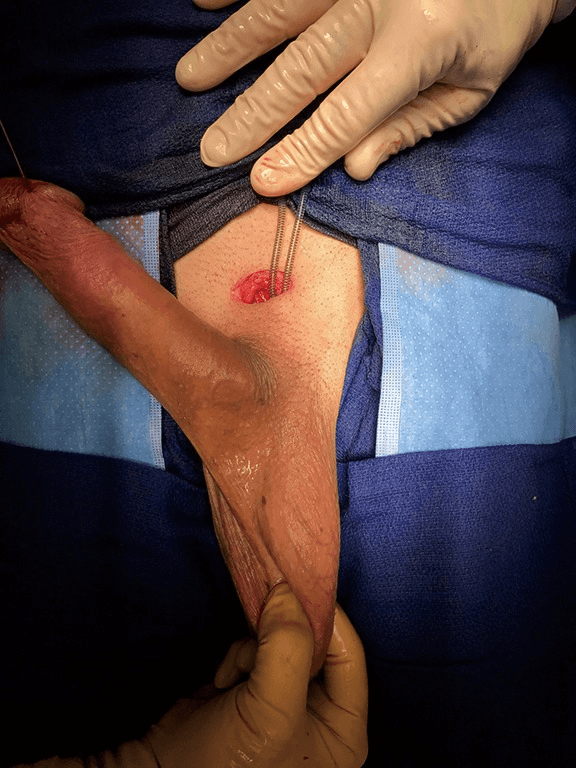
It is a surgical technique involving the insertion of a penile prosthesis through a small incision above the pubic bone, minimising the extent of tissue dissection and promoting a faster recovery.
2. What is the lifespan of a prosthesis inserted using this technique?
According to the study, the implant survival rate is approximately 94 per cent at 3 years and 92.5 per cent at 5 and 7 years.
3. What are the risks of complications?
Minor complications include pain, discomfort or urinary tract infections. Major complications (mechanical failure, implant infection) remain rare.
4. Is patient satisfaction high?
Yes, the majority of patients and their partners report being satisfied with their sexual function, quality of life and social well-being following the operation.
5. Is the infrapubic approach better than the penoscrotal approach?
Both techniques yield similar results in terms of satisfaction and safety. The infrapubic approach often allows for a quicker recovery and a shorter operation time.
Source and support
Article by Tarik EL RHAZAL, reproduced and adapted for TebbHelp from a publication on Urology Experts Turkey. The link to the original article is provided in the sources. The services described on the original website do not automatically constitute a TebbHelp offer: their availability and inclusion must be confirmed in a written proposal.
TebbHelp facilitates preparation and communication. This general information is not a substitute for a consultation and does not guarantee an individual outcome.
Sources
Further reading and references
External resources in English to explore the topic. Their inclusion does not mean their authors have endorsed this article or a particular technique.