Diabetes and penile implants: what assessments are needed before making a decision?
Diabetes and penile implant surgery: assessment, HbA1c, treatments and follow-up. Questions to discuss with your urologist before travelling abroad.
Author : TebbHelp Editorial Team
Published :
Updated :
French source medically reviewed — reviewer identity confidential
How can we reach you?
Required fields must be completed before you send the request.
General information: this article is not a substitute for a consultation or personalised treatment advice.
Do you have diabetes and are you still experiencing erectile difficulties despite the solutions you have already tried? You may be considering a penile implant, also called a penile prosthesis. Before choosing a hospital or a date for the procedure, it is useful to consider three key areas: the potential benefits of the implant, the risks relevant to you, and how your diabetes management fits in with your treatment.

This guide will help you prepare for a discussion with your urologist and the team managing your diabetes. You can use it as a reference during your consultation, noting down any questions you have and any points that need further clarification.
Does diabetes prevent you from having a penile implant?
Diabetes is one of the factors to be assessed; it is not, on its own, sufficient to determine whether an implant is indicated. European guidelines recommend a prosthesis following the failure of other treatments, or based on the patient’s informed choice. They also identify diabetes as a risk factor for implant infection. [1]
The consultation should therefore examine your situation and the alternatives. To prepare for this initial discussion, please also read our article on when to discuss a penile implant with a urologist.
Come prepared with a specific question: ‘What would justify this procedure in my case, and what might lead to it being postponed?’
Understanding sexual dysfunction before choosing a solution
Diabetes can damage the nerves and blood vessels involved in achieving an erection. Other difficulties may also be present, including ejaculation problems or fertility issues. Any change in your sex life is worth discussing with a healthcare professional, even if the conversation seems awkward. [2]
Explain what is troubling you: achieving an erection, maintaining it, feeling desire or ejaculating. Specify how long the difficulties have been present and their impact on your daily life. This information helps ensure that your concerns are not reduced to a single treatment option.
Managing diabetes, blood pressure, cholesterol and smoking remains crucial. Improving these factors can support sexual health, although it cannot guarantee a return of erections in every case. [2]
HbA1c: is there a specific target level to aim for?
HbA1c provides information on average blood glucose levels over the past few months. A recent result helps with pre-operative preparation, but its interpretation must be left to medical professionals. [3,8]
With regard to penile implants, the EAU emphasises that no randomised trial has defined the ideal acceptable HbA1c threshold prior to surgery. This does not mean that glycaemic control is of secondary importance, nor that a team cannot apply a safety protocol. [1]
Ask: ‘What target have you set for me, for what reasons, and what is the plan if I do not reach it?’ A figure found on the internet does not constitute either authorisation to operate or a personal risk assessment. Avoid changing your treatment on your own in order to reach a target figure quickly.
What documents should you bring to the appointment?
Gather any information you already have; ask the healthcare team which tests need updating rather than ordering them yourself:
- your type of diabetes, your latest test results and their dates; - your full list of medicines, including dosages and timings; - any episodes of hypoglycaemia and how you usually monitor your blood glucose levels; - whether you use an insulin pump or a sensor; - your medical history, particularly regarding heart, kidney and vascular conditions; - any erectile dysfunction treatments you have tried, their effects and the reasons for stopping them.
Perioperative guidelines emphasise the importance of sharing your medical records and having an individualised plan agreed upon by the teams. [3] Ask who is responsible for coordinating the information: the urologist, anaesthetist, GP or diabetologist. If two sets of instructions seem contradictory to you, ask for clarification before travelling.
How should medication and monitoring be organised?
Fasting and hospitalisation may require adjustments. The ADA’s guidelines provide for specific perioperative management of medication and insulin. Whether an insulin pump or sensor can be continued in hospital also depends on the clinical context and the facility’s resources. [4,5]
Ask for written, personalised instructions: what to take before admission, how blood glucose levels will be monitored, who will be contacted in the event of a problem, and how to resume treatment after discharge. Do not follow another patient’s protocol.
Report all your treatments, including weekly injections and medicines prescribed for other conditions. If the instructions do not specify your exact medication, contact the healthcare team. The preparation should enable you to understand the plan, without having to improvise whilst travelling.
What do you need to know about the implant itself?
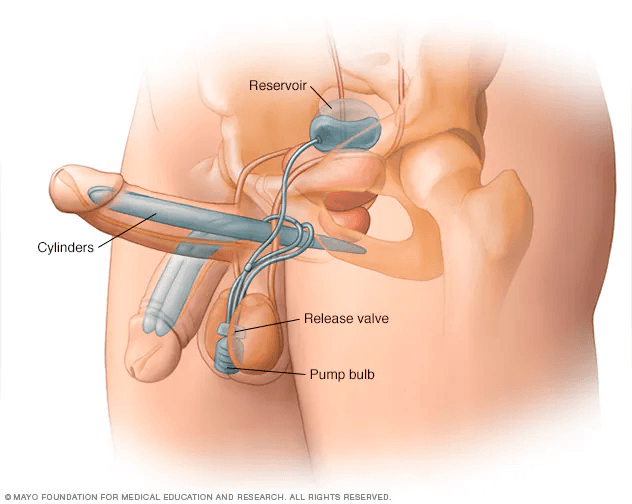
A prosthesis is designed to provide sufficient rigidity for sexual activity. The surgery must be regarded as irreversible: removing the device does not restore the original erectile mechanism. Alternatives and your expectations should therefore be discussed before a decision is made. [6]
Choosing the model also involves a practical consideration. An inflatable penile implant requires the use of a pump; any difficulty in using your hands should be mentioned. Ask for a demonstration and time to explain what you have understood. [6]
Ask for clarification on the risks, the possibility of further surgery and how to learn to use the device. Ask specifically what you can expect in terms of rigidity, sensation and length. You may also invite your partner to the consultation if you wish, although this is not compulsory.
If you are considering treatment in Turkey, also make arrangements for your return journey
Follow-up care must be organised before you book. The CDC recommend planning ahead for the management of any complications and obtaining the medical documents necessary to ensure continuity of care. Travelling after surgery can pose additional risks, particularly those related to blood clots; the travel schedule must be discussed with your healthcare team. [7]
Ask for a written response regarding:
- the check-ups scheduled whilst you are there and after your return; - the healthcare professional to contact if you have any questions about the implant or diabetes; - the documents provided on discharge, in a language you can understand; - the costs included and those for any follow-up care or potential complications; - the conditions you must meet before travelling.
If you suspect a complication, seek medical advice promptly, either whilst abroad or upon your return. Do not wait for a response from an intermediary to seek treatment. [7]
Preparing for your next conversation with TebbHelp
Would you like to clarify a plan for treatment abroad? Start your TebbHelp journey to specify your objectives and preferences, then request support. Prepare your questions for the medical team; ask which channel to use before sending your medical records.
TebbHelp makes it easier to plan your journey and communicate with healthcare providers. The assessment of your diabetes, the need for surgery and treatment guidelines are the responsibility of the healthcare professionals looking after you. You can read more in the medical information centre.
Article references
Sources consulted on 3 October 2026. Their inclusion does not imply that these organisations endorse TebbHelp or have reviewed this article.
1. European Association of Urology. ‘Management of Erectile Dysfunction’, sections on treatment and penile prostheses. EAU recommendations. 2. National Institute of Diabetes and Digestive and Kidney Diseases. ‘Diabetes, Sexual, & Bladder Problems’. NIDDK information. 3. Centre for Perioperative Care. “Guideline for Perioperative Care for People with Diabetes Mellitus Undergoing Elective and Emergency Surgery”, updated December 2022, document hosted by Diabetes UK. Used for the principles of coordination and preparation, not to reproduce a dosage schedule. CPOC Guide. 4. American Diabetes Association. ‘Section 16: Diabetes Care in the Hospital’, Abridged Standards of Care 2026, March 2026. ADA 2026 Recommendations. 5. American Diabetes Association Professional Practice Committee for Diabetes. ‘7. Diabetes Technology: Standards of Care in Diabetes—2026’, recommendations 7.29–7.30. Full text on PMC. 6. British Association of Urological Surgeons. ‘Implantation of penile prostheses’, factsheet dated June 2024. BAUS factsheet. 7. Centers for Disease Control and Prevention. ‘Medical Tourism’, Yellow Book 2026, page dated 23 April 2025. CDC chapter.
8. National Institute of Diabetes and Digestive and Kidney Diseases. ‘The A1C Test & Diabetes’. Understanding HbA1c.
Sources
- https://uroweb.org/guidelines/sexual-and-reproductive-health/chapter/management-of-erectile-dysfunction
- https://www.niddk.nih.gov/health-information/diabetes/overview/preventing-problems/sexual-bladder-problems
- https://www.diabetes.org.uk/sites/default/files/2023-01/Surgical%20CPOC-Diabetes-Guideline-Updated2022.pdf
- https://diabetesjournals.org/docm-care/article/doi/10.2337/doc26-a016/164627/Section-16-Diabetes-Care-in-the-Hospital
- https://pmc.ncbi.nlm.nih.gov/articles/PMC12690173/
- https://www.baus.org.uk/_userfiles/pages/files/patients/leaflets/Penile%20prostheses.pdf
- https://www.cdc.gov/yellow-book/hcp/health-care-abroad/medical-tourism.html
- https://www.niddk.nih.gov/health-information/diagnostic-tests/a1c-test